Call: +91 94498 53834
Mon - Sat 8.00 AM - 4.00 PM IST


धर्मे च अर्थे च कामे च मोक्षे च भरतर्षभ ।
यदिहास्ति तदन्यत्र यन्नेहास्ति न तत् क्वचित् ॥
- Mahabharata, Adi Parva (1.56.33)
"In the matters of Dharma, Artha, Kama, and Moksha, O bull of the Bharata race, what is found here may be found elsewhere; but what is not here is found nowhere."
Western history is often viewed as a linear archive of fragmented data—a chronological record of events and power shifts. In contrast, Bharat’s concept of Itihasa (derived from iti-ha-āsa, "so it truly happened") is not merely a collection of information, but the engine of civilizational continuity. Itihasa is the deliberate process of remembering the eternal, ensuring that the wisdom of the past remains a living presence that guides the present.
Comprising the great epics Ramayana and Mahabharata, along with the Puranas, Itihasa is revered as the "Fifth Veda." These are not dry chronicles; they represent the confluence of historical truth and universal motifs that illustrate the perennial play of Dharma. By weaving the past into the fabric of everyday life, Bharat ensured its identity remained an unbroken thread, treating history as a mirror of the human condition rather than a distant relic.
In this section, explore how the timeless wisdom of Itihasa serves as the heartbeat of Bharat’s enduring civilisational journey.
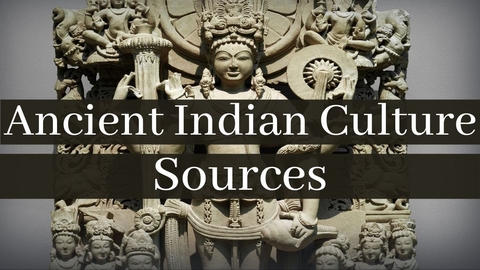
Indian Culture is not only diverse but also very daunting for a beginner. This video will help one to start their jouney to know about ancient Indian...